Sunday, February 26, 2006

I love doing experiments.


This season I want to do only one experiment: to try Alpine hive.I have read about this hive last year from” The Beekeepers’ Quarterly”.Why I want to try this hive? Because constructor claims,” the average season honey crop per a hive exceeds the honey crop of more frequent hives, especially in seasons with not very favorable honey crop.” Now, I’m using Longstroth hive and Dadant. Anyway there are a lot of explanations. For this we have to go back in time.
As I told you I live in Arad,west of Romania, 40 km far from Hungarian border and 100 km far from Ex Yugoslavian border. Hundreds years-- till 1918- the area was under austro-hungarian overruled. So,the local beekeeping was influenced by the austro-hungarian beekeepers. Just take a look to the hives(frames) used in my area:
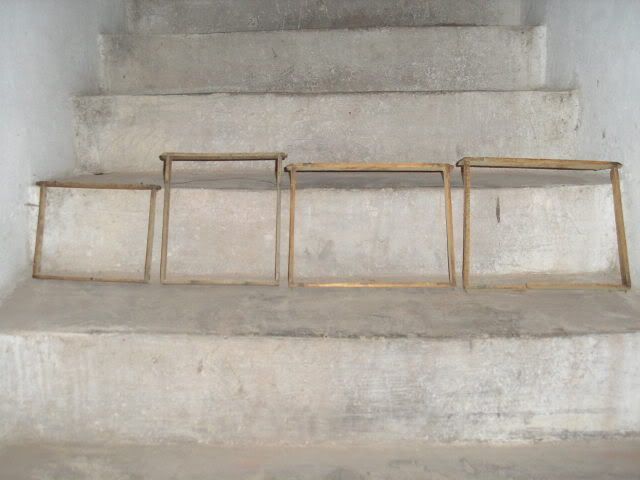
-Orszagos 19/22,5 cm ~855 sq cm
-Neizer 25,5/22cm ~1122 sq cm
-Kuncs 24/31 cm ~1488 sq cm
-Arady 26/30,5 cm ~1586 sq cm
As far as I know the measurements for Longstroth 1676.6 sq cm and Alpine Hive is 27/21 cm ~1134 sq cm ( Oh,God I hate math).
Years ago,with my friend, I was going with the bloom.My friend had Kuncs hive(frames). Our hives were roughly strong but every time he got more honey than me up to 5-7 kg. I keep asking myself why.
3 years ago I met a beekeeper not far from my out apiary who changed his hives from Lonstroth to shallow hive (like shallow supers). With this hive he got about 16kg/hive when other beekeepers in the area got 6-7 kg/hive ; I have to mention that the season was poor like last years .(Other beekeepers testimony, not his)
For long time I realized that the beekeepers in my area don’t persist(they are not headstrong like a mule) they have a good reason to use old hives.
This is why I want to try this Alpine Hive.

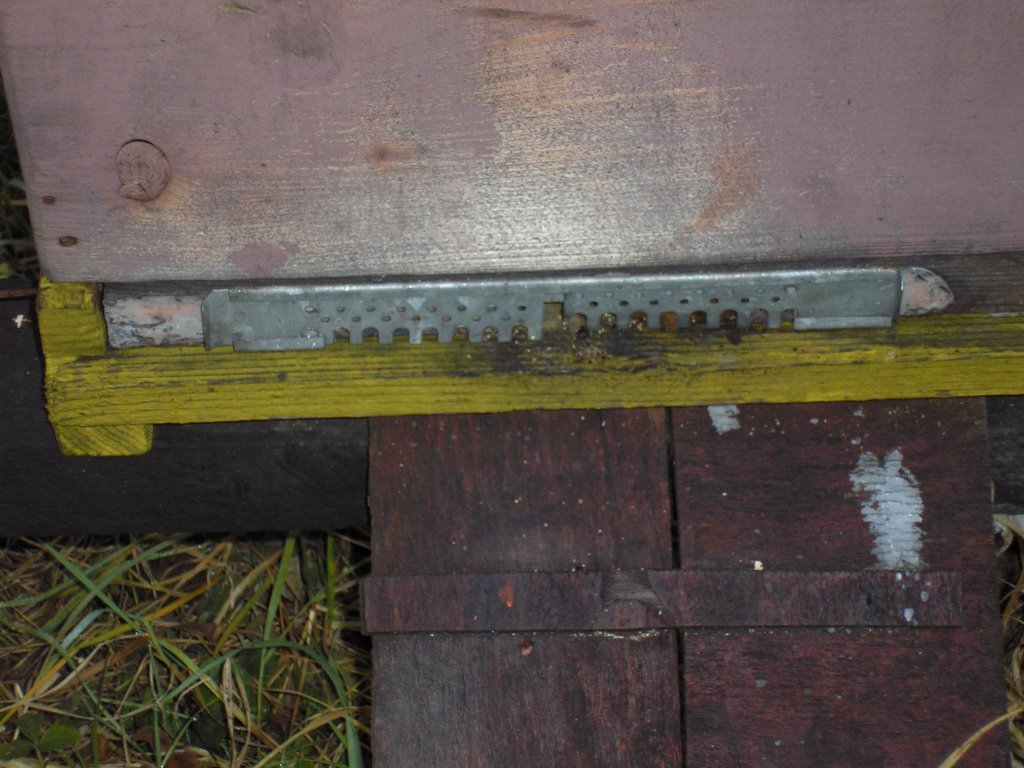
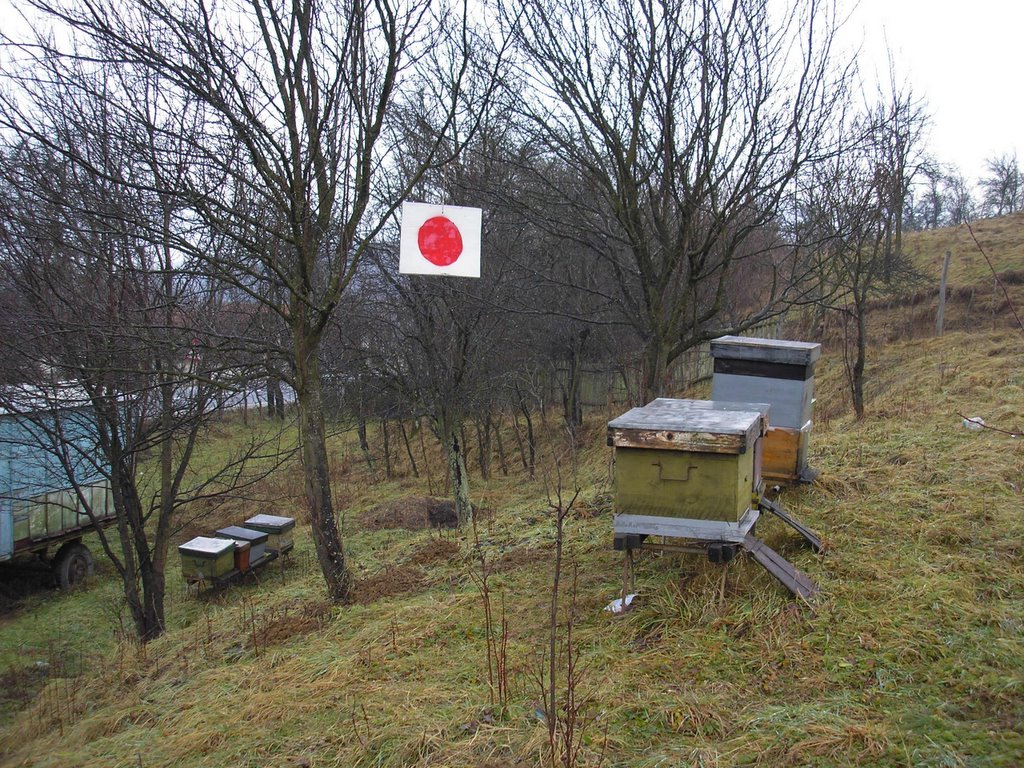
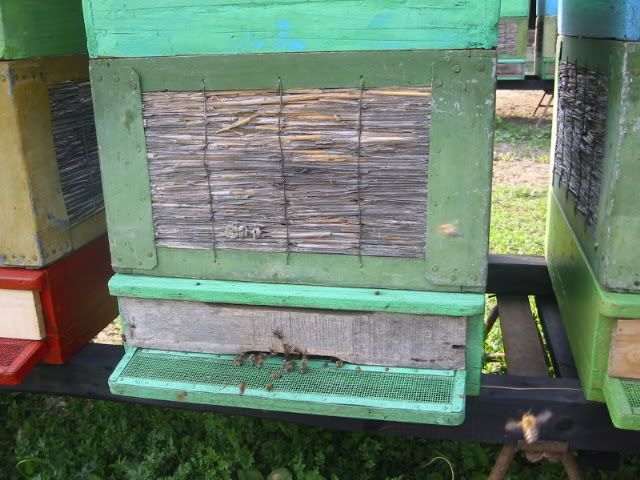
Legend:Above photo: old Dadant hive made from reed(cane) not from wood.8o years old yet in use.
Below photo from left to right: Orszagos,Neizer,Kuncs,Arady frames

Friday, February 24, 2006

2006, February 22


Local weather:6 Celsius degrees(42 F) sunny day .After 4 weeks of cold weather(lower temperature -16 C (3 F) I can visit my bees. For 3 days I try to visit my bees,but every time something happened so I have to postpone my visit but.... today I can visit my bees.
In the train on the way to my beeyard I I was asking myself how the situation will be.
16 PM I arrived on beeyard.
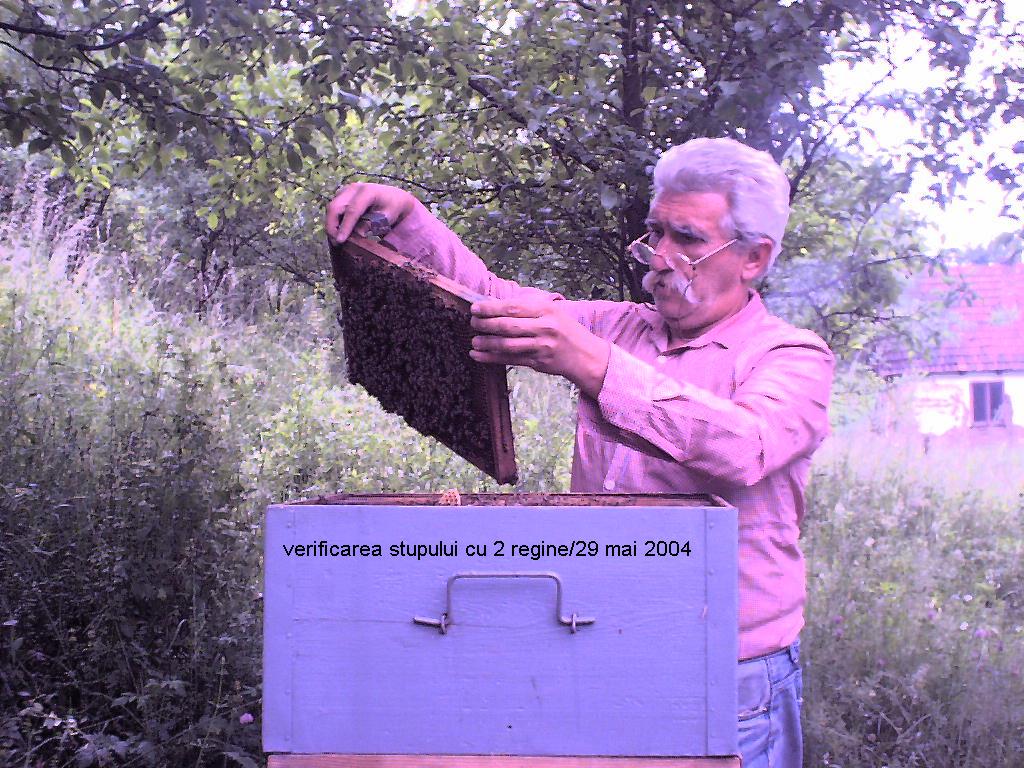
16:15 PM checked the first hive and I found:Disaster. The colony dead.Oh, my God! A good start.! A fugitive look did not tell me what was wrong. Anyway they had plenty of food and no sign of diarrhoea. I’ll check next time. I wonder what could be? You can see my face looking to the the hive.(click here)
Except of one weak colony (in my opinion) ALL THE COLONIES ARE OK. I have to make plans for coming season. For sure I’ll try to double my colonies.Well,I’ll try this year Roger Delon’s Alpin hive..
It’s still winter here(as you can see) so I have to wait.The spring will start here in 20 of March spring equinox.
Till then I wish you planty of flowers for your bees.

Tuesday, February 14, 2006

Enamoured


Enamoured
What happened if a 53 years old beekeeper will fall in love?
First of all it would be a problem. Well, I don’t know when to celebrate lovers’day. It would be 14 of February or 24 of February. The Valentine’ day is the celebrate in 14 of February is ideantical with Dragobete lovers’ day celebrate in 24 of February.Dragobetele is an old traditional celebration here in Romania. You can put equal sign between this two. The birds wedding take place in 24 of February. An old saying:if you have a chance to hear the hoopoe in this day you’ll be industrious(labourious) all the year round. It’s not my problem.
So, the answer is: if a an old beekeeper will fall in love he will love his bees.

Saturday, January 28, 2006

Knocking to know what happen


Finishing with the technical problems concerning the blog(thanks to Toni Bee)let’s focusing on beekeeping. I’ve read in BeeSource Forum about checking the hives without opening them(in winter time).
Back in nineties –when I started beekeeping-I was teach to listen and understand how the bees winter,without opening the hives.If you do treat the bees properly before going to the winter the two things you have to looking after:food and queen.
Here is how the system work.All you need is a plastic(or robber) hose. It’s better if you have a stethoscope.(sound like surgeon job ). Now pick up one hive(you think that something wrong is going on),put the robber hose in to hive entrance and knock on the hive body(only once). You’ll get a lot of answers:
1.A short,intensive buzz tells you that the bees wintered OK there are no problems with food and the queen.
2. The very feeble buzz similar to the rustle of a dry leaf tell you that the bees have no food.
3.The prolonged buzz,spotty in intensity and weeping show that the queen is not in hive(is dead).
You can try this system(cost you nothing).I use this and works. Please try it.

Friday, January 13, 2006

Spotting a queen


Half winter gone. We have only 3 month of winter and the spring will be here. What a Drone like me is doing this time?Try to repair his equipment for next season and reading beekeeping forum.
Beesource Forum one of the topic “Spotting a queen”.First of all I have to said that Michael Bush metaphor about queen moving is great:”The queen is moving she is listening to Schubert or Brahms.She move slowly and gracefully.It’s like she’s waltzing and the workers are doing the bossanova.”
About finding the queen (spotting) one of the greatest Romanian beekeeper L.C. Hristea wrote in his book “The Beekeeping” that the queen usualy stay during the night in the middle of the hive.In the morning she will be one the first or almost the second frame from the center. In the afternoon she will be on the last(or about) frame of the brood nest. I tested this few years ago and 6 out of 10 it worked. I made a drawing to try to explain this ( click to see).When you looking for your queen in your hive try to think to this . See you!
.

Wednesday, January 11, 2006

First visit in 2006


To day-5 January I visited my bees.The temperature at 11 am was 9 degrees Celsius. I’m glad they look OK.I have put patties (I use to call them “cakes”) made by myself(honey+ dust suger+pollen) .
Well, I’m happy because my bees are OK.My hopes resurrect and so the plans for this year. I want to double the colonies. The snow gone but is cold and. Looking at this 2 pictures I realised how much I love summer. It will be here soon. But till then I have to do a lot.Repairing and fixing old supers,repairing and fixing old frames , old top and bottom boards or making some new tops and bottoms .Not plenty of time now......and only maybe until end of March or into April to get this done .

Tuesday, January 10, 2006

George is writing


Hi All,
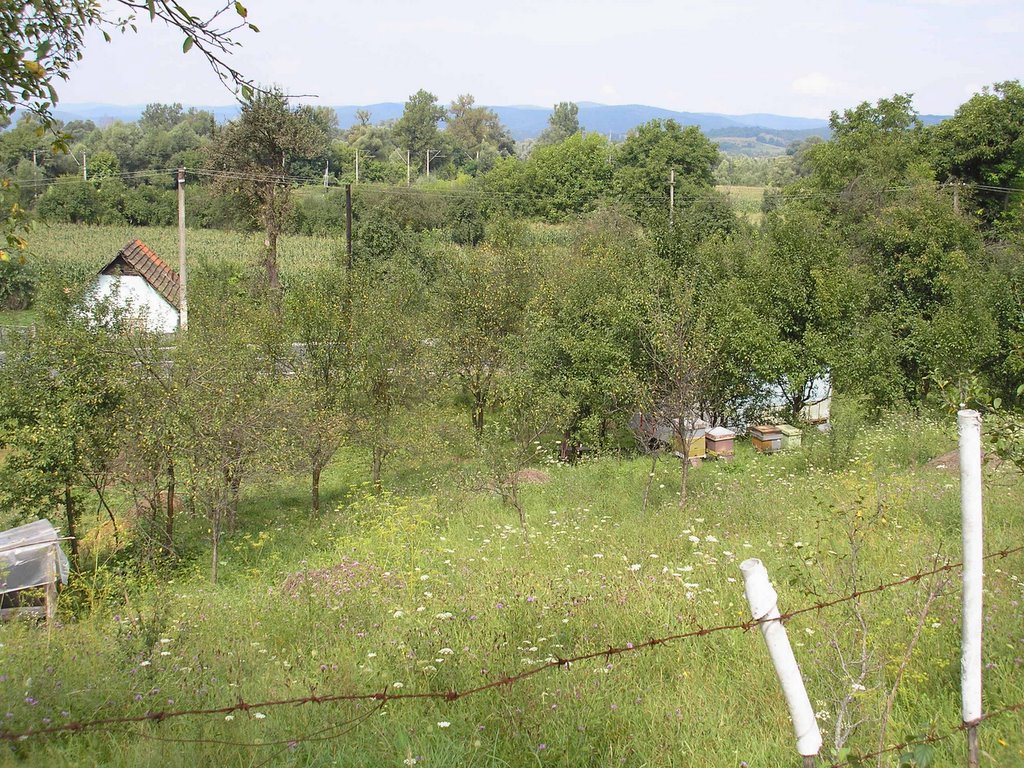
My name is George Tamas,I’m 53 years old and I live in Arad(some photos of my home town).Arad is situated in the west of Romania .
I start this blog to share information about bees and beekeeping and to tell to beekeeper all over the world that : there are beekeepers here.
I started the beekeeping back in 1989 and for one year I kept 2 hives on the balcony.There were the time I learned a lot about bees. I came back from work and stayed on the balcony for hours to see the bees coming and going and read about bees and beekeeping.
In 1993 I had the chance to know John Phipps and his wonderful magazine “The Beekeepers Quarterly” and a lot of beekeepers and men involving in beekeeping industry like:Mathew J. Allan, Michelle,
Foucon, Jorn Johanesson,Jack Griffes,Jeremy Owen.
As happen in real life the things are not as we wish. Back in 1995 I was elected Trade Union leader and having problems with the company board I became unemployed.
Starting a new job I can’t have a proper care so from 63 colonies and now I have only 7 hive. I hope that this year to double the number.For the love of bees I did buy a terrain in the village Capruta- 62 km far Arad and I start learning to use PC.
Because is winter time and we do not have to work in apiary I’ll tell you more about me and romanian beekeeping.See you!